Hey everyone! ✌️
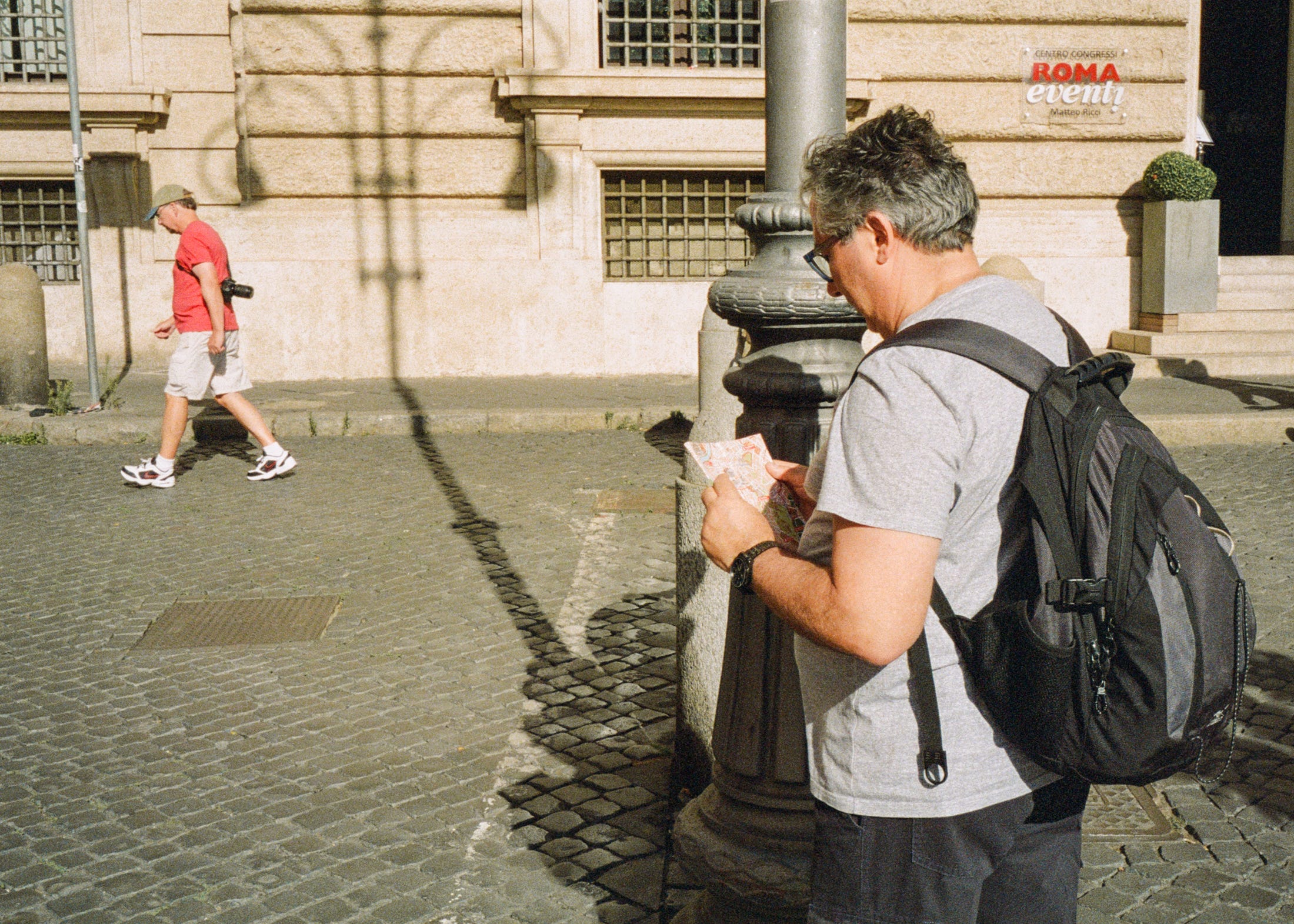
Not long ago, I had a little idea I was working on for my first street photography zine - a collection of images featuring people looking at maps, from 3ish years of travel. Six weeks later, I’ve published that project and taking it to a book fair in Bristol! zine.mackiec.xyz
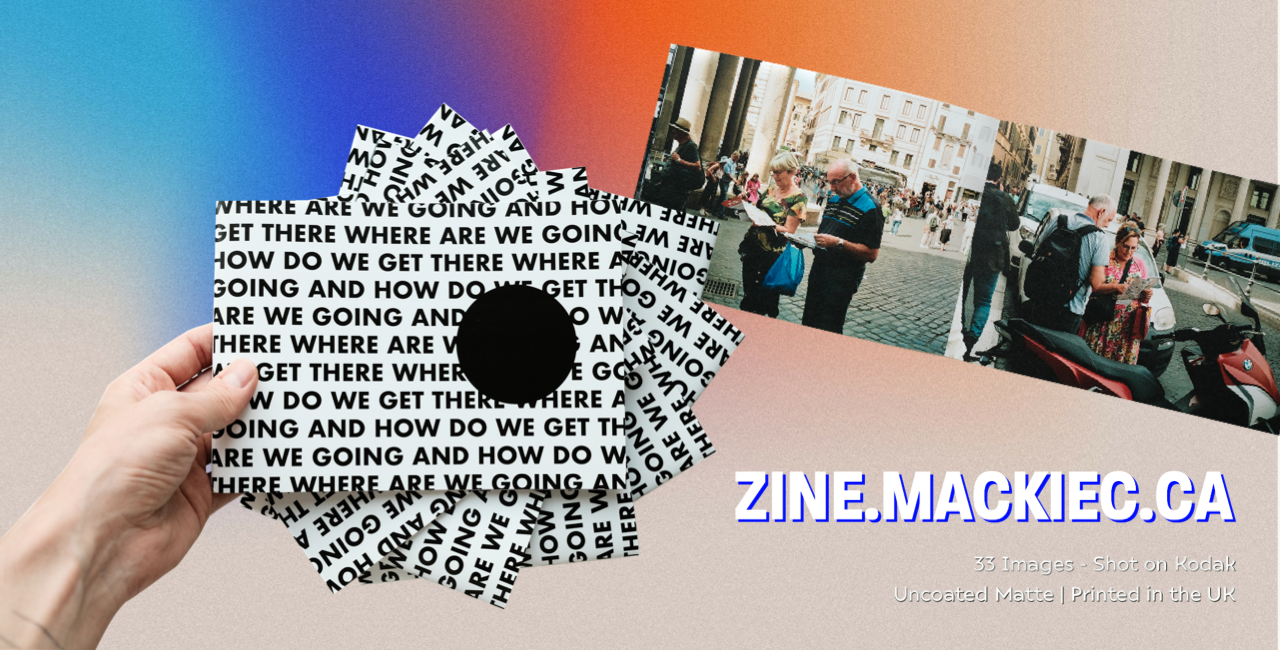
I couldn’t have done it without learning from others and staying humble about this being an entirely new skill set to practice. From selection, to sequencing, to design - here’s exactly what I did.
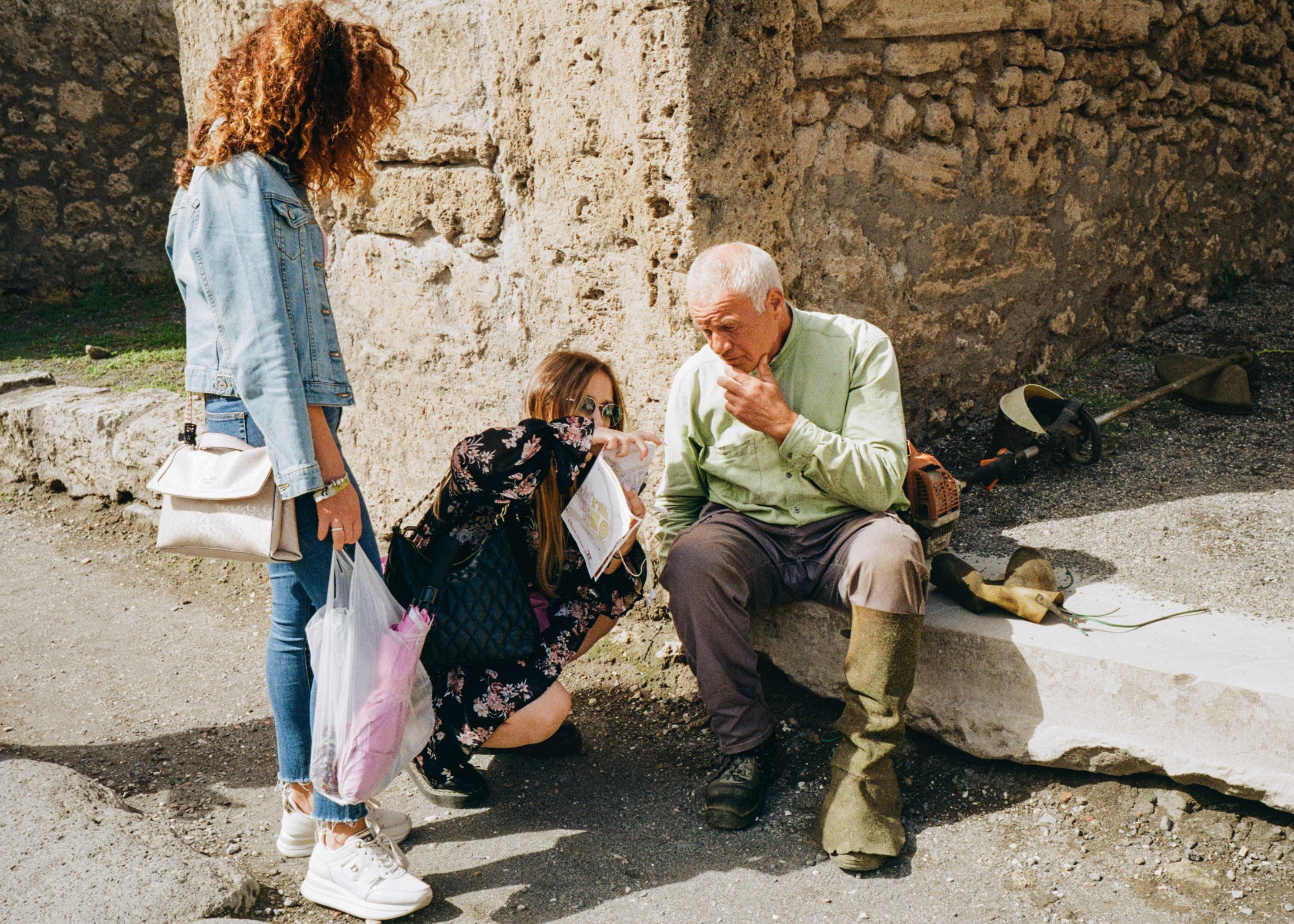
Step 1 - Learn Everything All Over
Start by not even thinking at all about your zine. Don’t forget it entirely to the point where you don’t do it, but if your attention is constantly focused on the output, you’ll lose track of a lot of great sources of input all around you. Look at other people’s work, and buy a lot of zines and photobooks that may not even be in the same sphere of work as your own. When the time finally comes where you sit down and start to build your project, all that influence surfaces - you’ll remember there was a paper type you liked the feel of, or the way you saw an image placed on a page that caught your attention. The picture you hated so strongly it made you physically sick but actually, it was kinda perfect contextually in the project.
Part of the learning phase is also going to be examining your own work. You might think you have the perfect concept for a zine, only to find out the work you thought you wanted to show actually sucks when you put them all together. It might be worth asking yourself - what have I missed? Are there any lost and lonely images you like that you can start to build from?
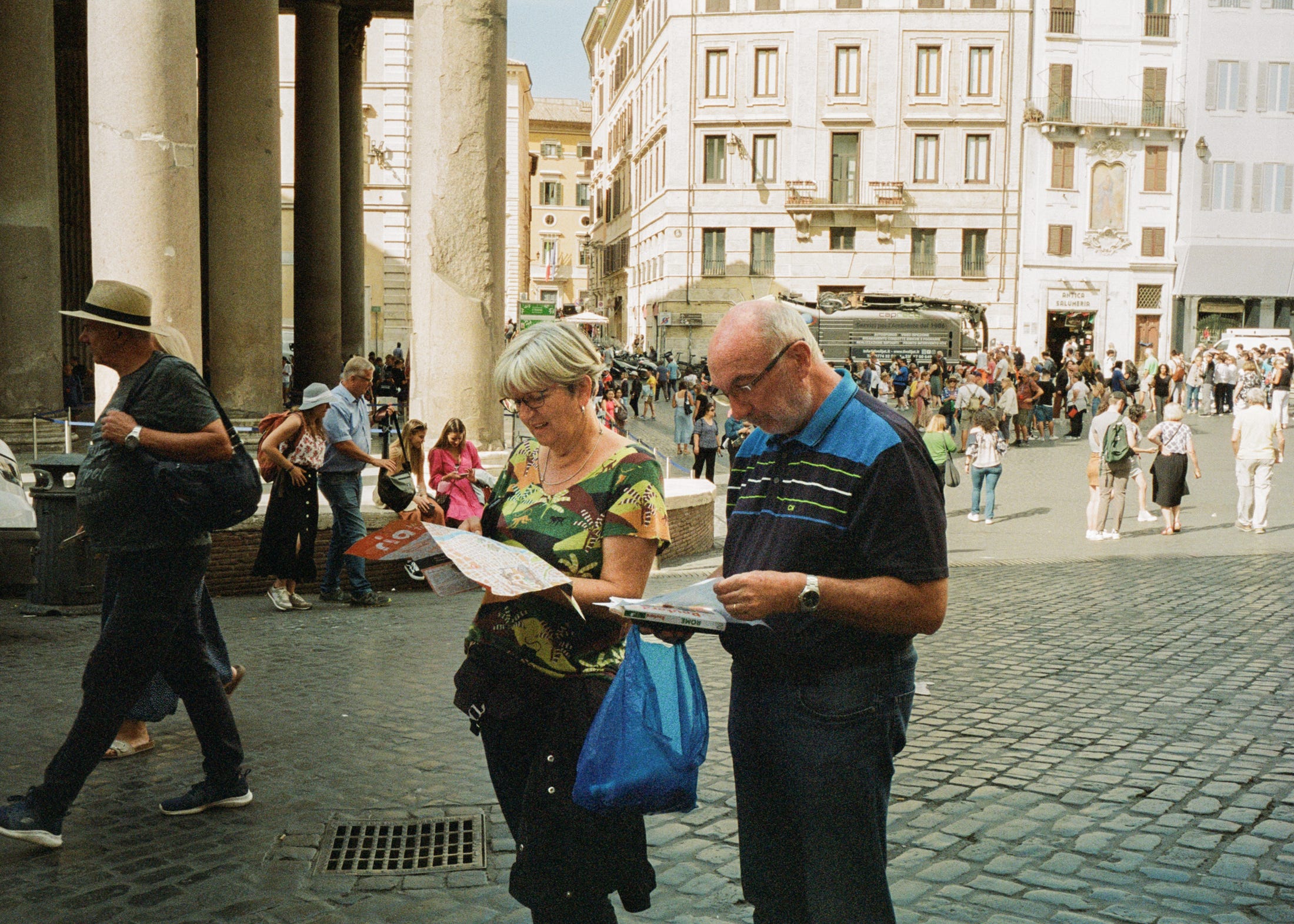
That’s where I found myself near the start of 2021. I thought I had some good work, but I didn’t have anything cohesive. Through the process of organising my archive, I found multiple scenes I liked where couples were looking at maps to find their way. It felt nostalgic and sweet - and that’s where the process stopped. Had a few good shots, liked ‘em, forgot about them. Inevitably my wife and I would go away again somewhere new, I’d get my scans back from the lab, and as I’d go through them I’d spot one or two featuring a map. ‘That’s neat’, I’d mutter to myself, then I’d forget about them again.
Two years of that process, repeated every month or so, and I finally started to see a body of work come together that I felt fit the requirements of a zine. From a total of about 50 images, I cut out the worst ones and I was left with 33.
Step 2 - Sequencing (If You Care)
I think there are two schools of sequencing; it either takes 30 minutes or 5 years. The incredibly frustrating part is that it’s entirely possible for you come away with the same result either way. Personally, I think you wanna fall somewhere in the middle. The Goldilocks zone of ‘well-considered but actually completed’.
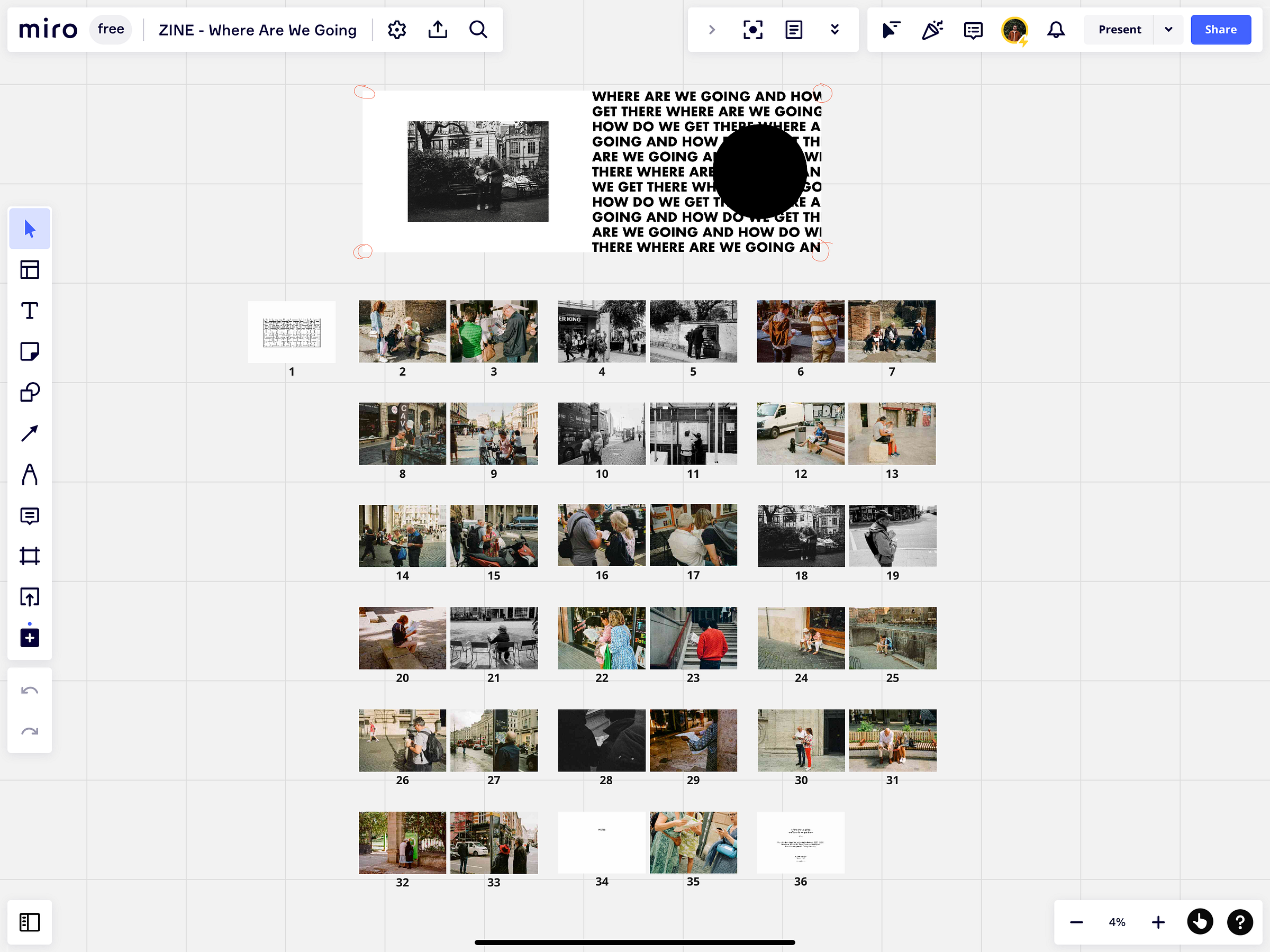
Earlier this year, I was lucky enough to spend a couple of days making books with Tomaz Laczny and Sayuri Ichida, both award winning bookmakers. In the course, Tomaz talked about sequencing like musical notes in a composition, which I’d never heard before. So - not just image A & image B have a relationship, with C & D following that. A might also inform what D is trying to say, which might even inform Y & Z way later on down the sequence. Essentially, image pairings don’t have to be static in just relating to the image opposite, or finite once the page leaves the memory.
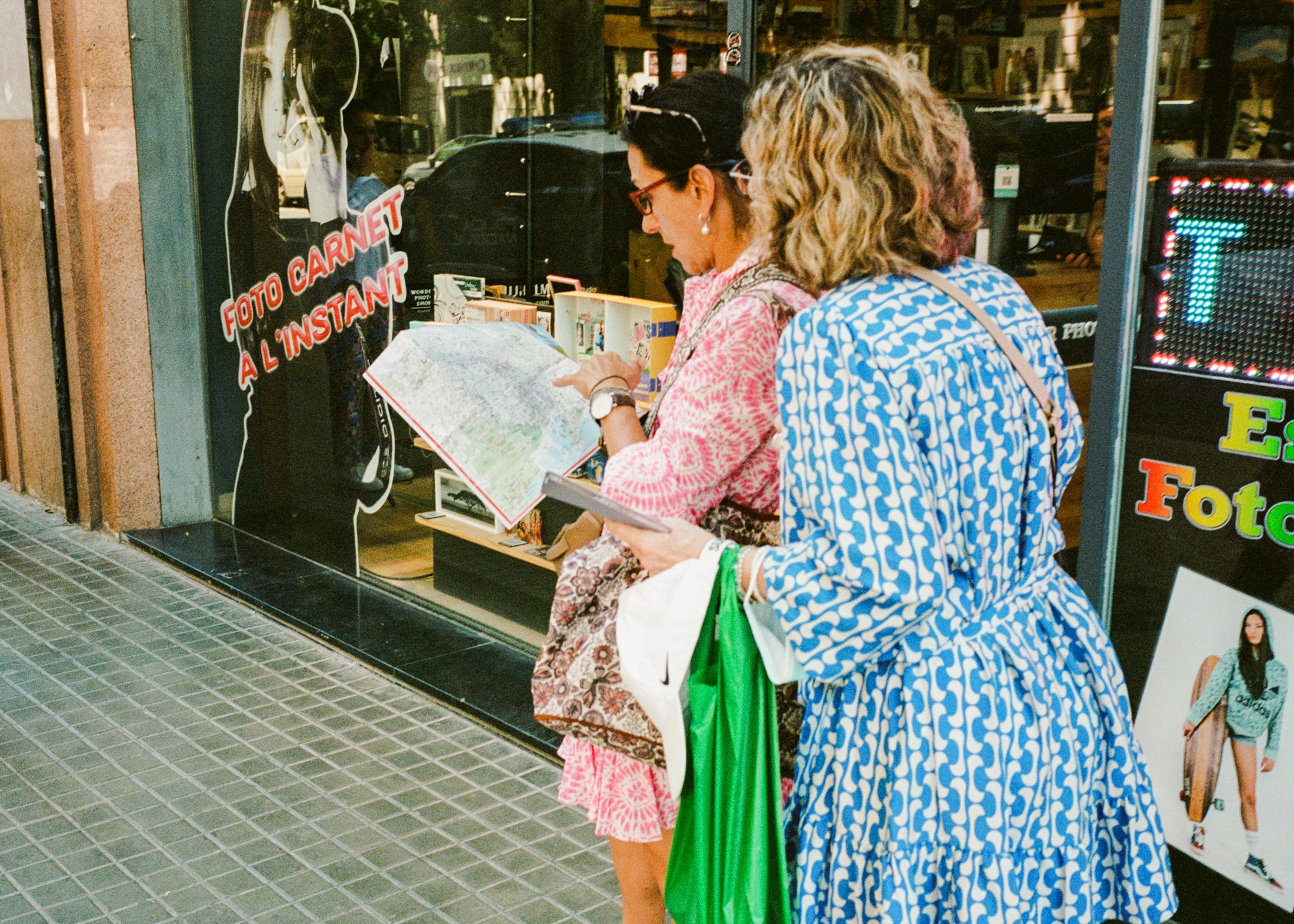
With ‘WHERE ARE WE GOING’, I really took this to heart. Take images 3, 4, 5, 6, 11, and 16 as an example.
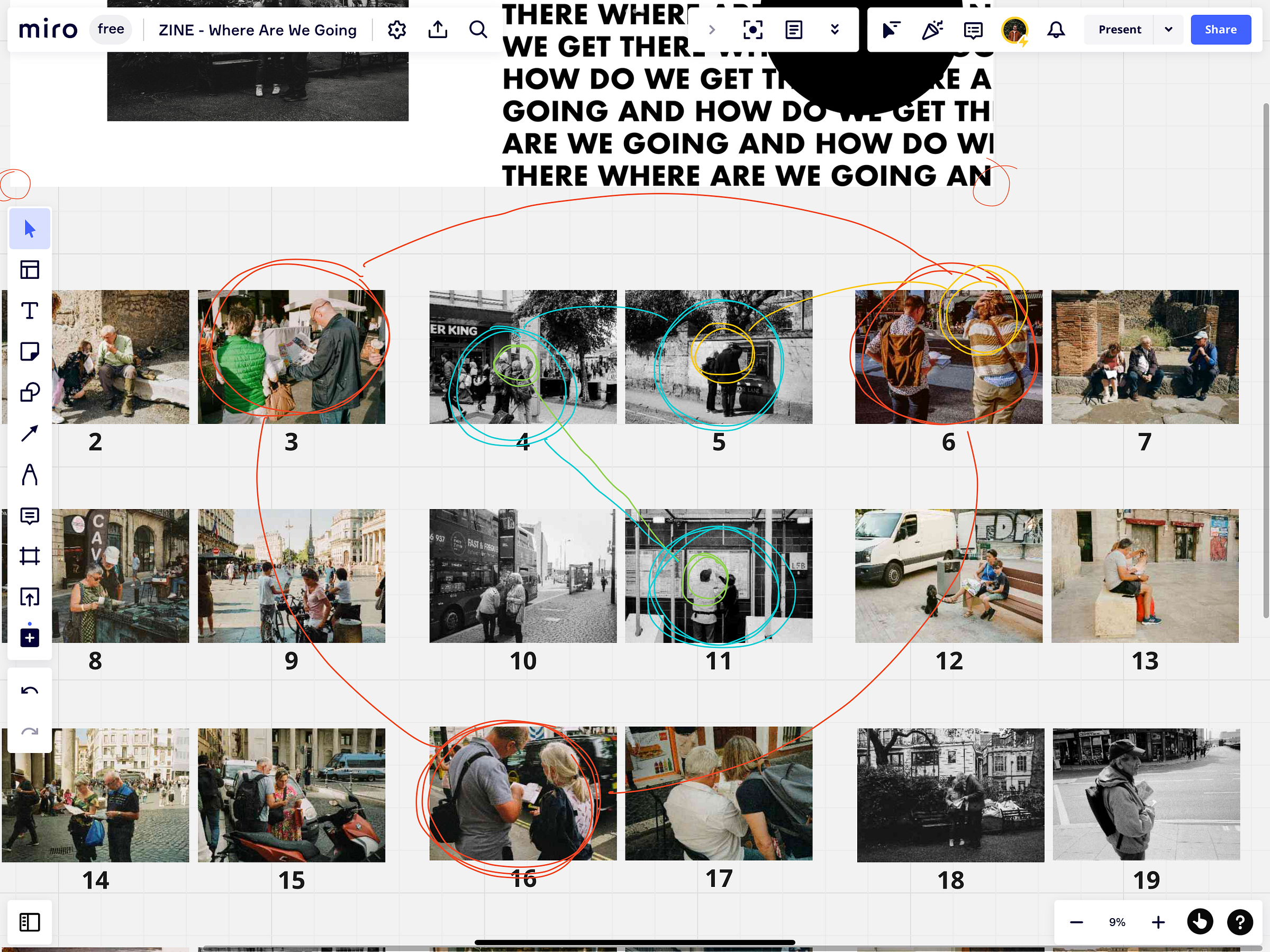
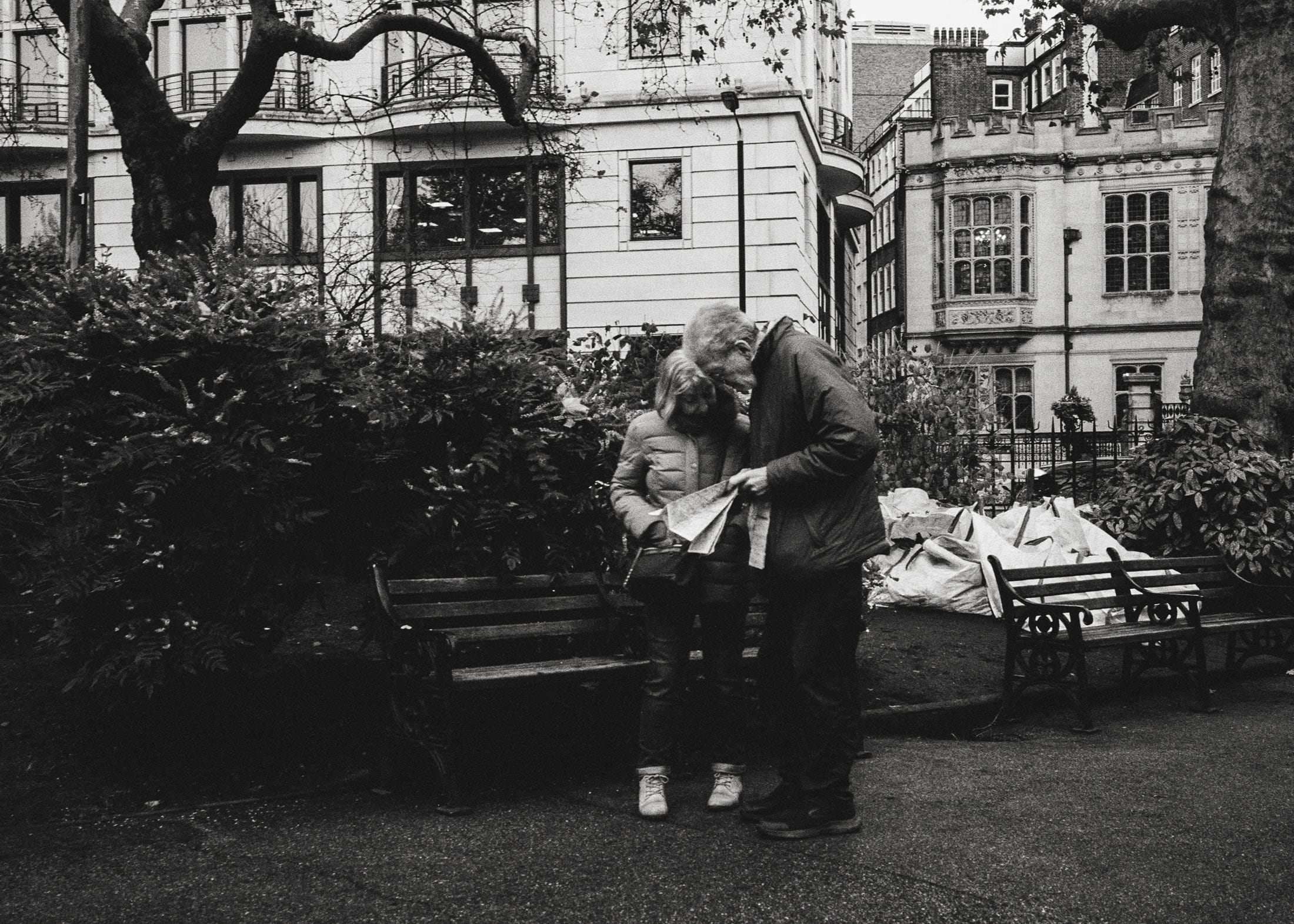
The mystery of ‘did you mean this or did it just happen’ should be generally left unknown, but for the sake of argument - I meant all of this when I put this together. Anyway, 4 and 5 are clearly related with the couple in mirrored positions, so they go together. But 5 also plays nicely with 6 where their hands are on their heads, and 6 recalls 3 in the way the players are positioned with a map in between them. I originally wanted to put 6 and 16 together, but then it felt unbalanced with too many similar elements in a row. At position 16, recalling the earlier shapes gives a centered weight to the sequencing, and same with putting 11 where it is, which is harmonising with 4 thanks to the pointed fingers.
Even breaking rhythm is defining one. With 18, I wanted to set a clear new direction, so we switched perspectives from ‘close behind’ to ‘front and away’ - as if we’ve slowly been creeping up closer (from 12 to 17) until our nerves got the better of us and we backed away.
Step 3 - Design Your Own Vibe
I have a dozen photobooks on my shelf that one could be excused for mixing up if not for the covers. It’s 50 to 100 centered images, surrounded by white borders, with context of time and place maybe tucked away at the bottom right corner of the page, or else on an opposite page. It evokes a gallery experience on your tabletop, and that’s what it’s designed to do and you’re supposed to have a tea about it and go ‘hmmm… yes’ when you flip through it.
Zines are supposed to be fun. Don’t get me wrong, I hope I have a big hardcover gallery-sequencing book out one day (that a publisher pays to make - hi, contact me). But for a self-published product, you set the rules or lack thereof, so don’t fall into the norm of bigger projects. I put my cover image on the back. Why? I don’t know, it felt right there. I wanted big bold fuckin’ lettering right on the front because I liked it, and I put a maze up at the front and a notes section at the back to play with the idea of the little extras that come in local guidebooks.
Ultimately, your design should match how you want to display your work and not seek to appease your idea of how much someone else might like to experience it. The zine itself is the project as much as the images within it, so let them inform each other and please you most of all. One of the concepts I most liked to think about in the process of conceptualising the zine was the fact that we expand our blind spots when we explore, or when we ask others to guide us. So I put a great big blind spot on the cover to speak to that inspiration. It not only works as a design element, but it says something about what I was thinking about in my process, wether anyone notices or not.
It’s these kind of things that make the self-publishing process special, so embrace your total creative freedom and make something that will outlast you.
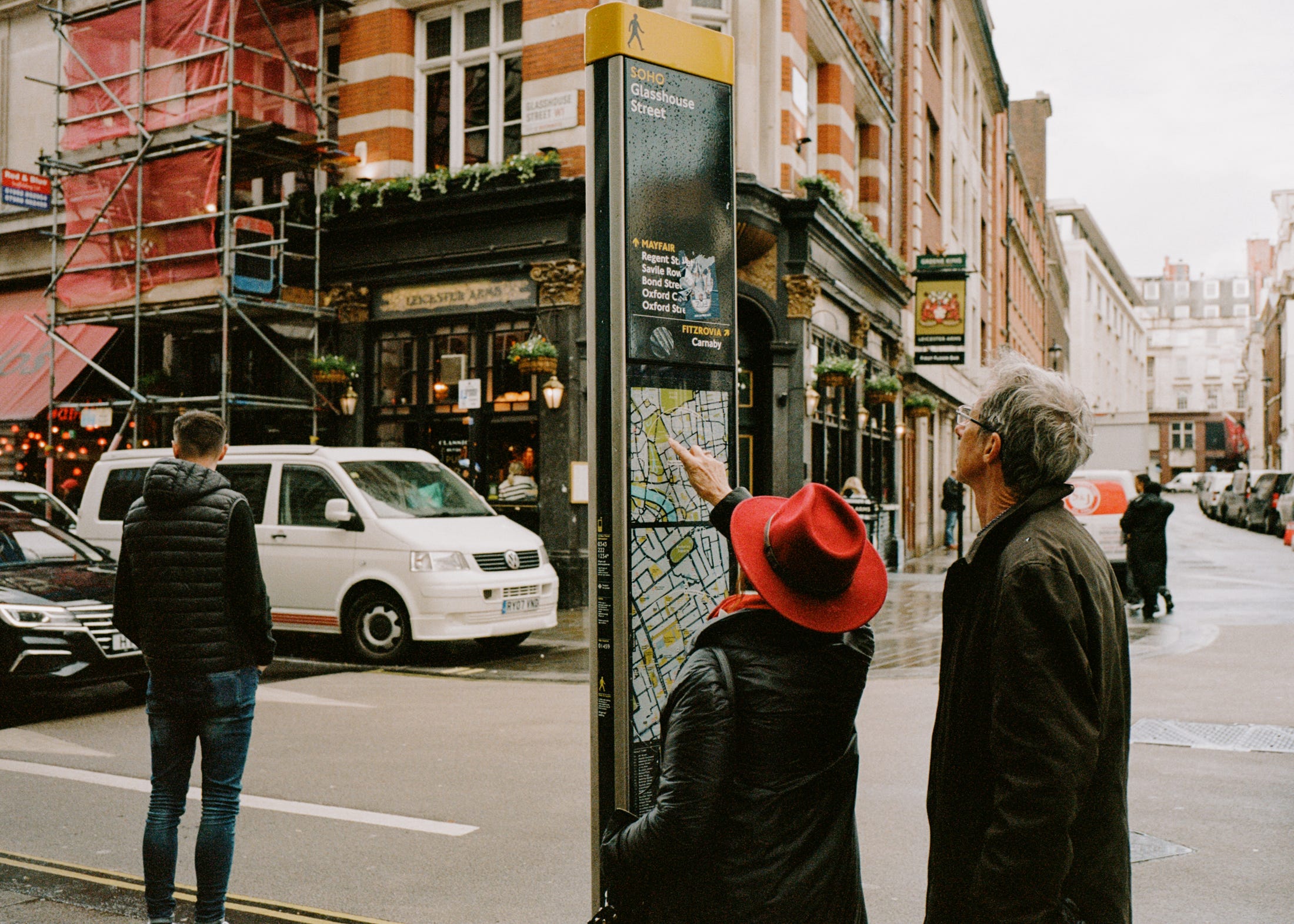
Editor’s Note: The zine, ‘WHERE ARE WE GOING’, is currently in pre-order and is shipping starting on Sept 4th. I’ll be at the BOP Bristol Bookfair 2023 with a table in The Martin Parr Foundation building on Oct 7th & 8th with copies of this zine, one other as-yet-announced one, and a variety of small prints. Come say hi if you can!